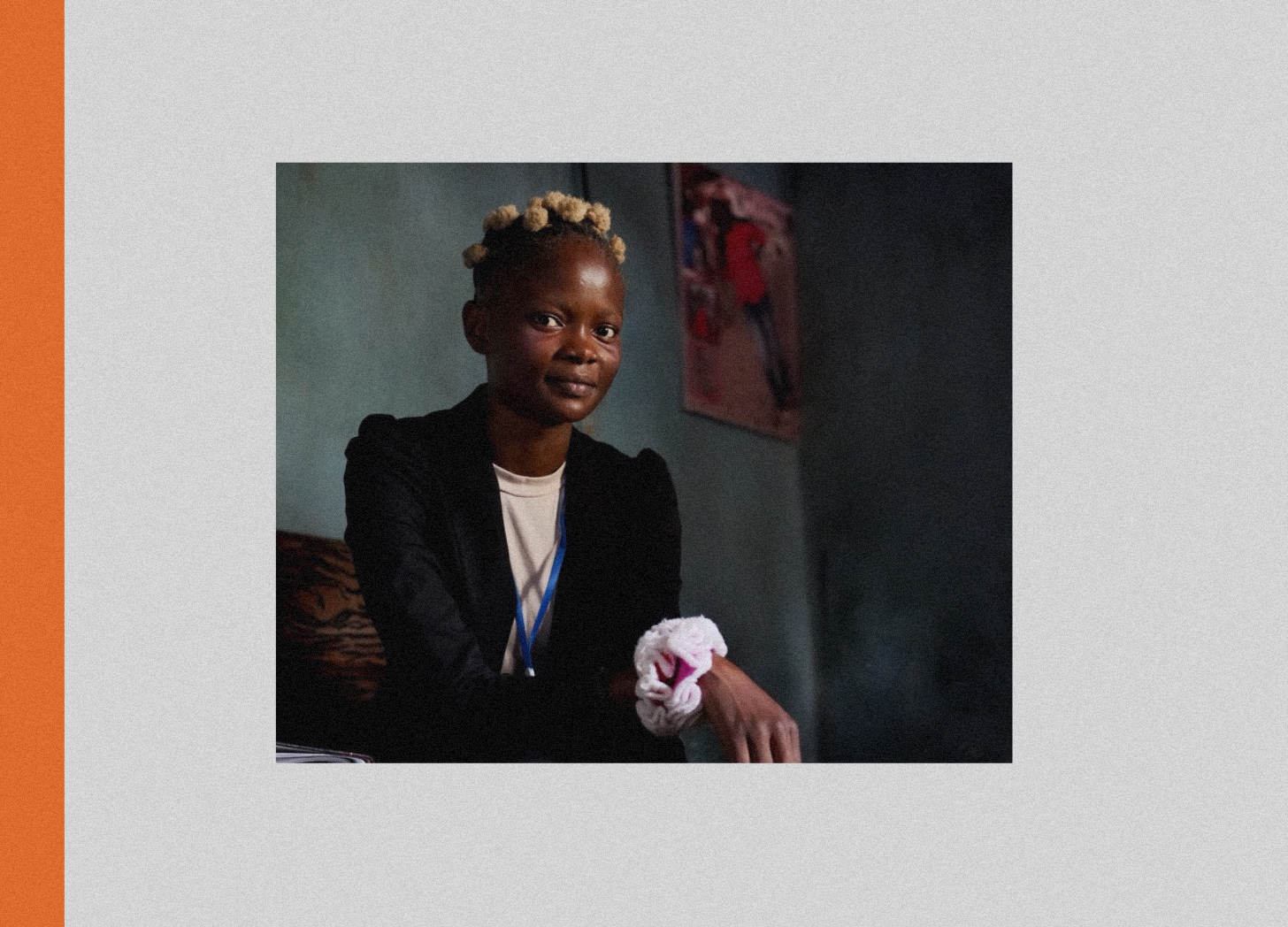
SIERRA LEONE
Roughly 75% of Sierra Leone's population is under 35, and rapid urbanisation is concentrating young people in Freetown's informal settlements — Bonga Town, Kissy, Dwarzark — where flooding, limited education access, and gender-based violence define daily life.
Dreamtown's work here focuses on non-formal education, safe spaces for girls and young women, and youth-led community transformation through place-making and advocacy. Partners like YDC-SL anchor a model where young people design, manage, and sustain their own community interventions — an approach validated by published research on participatory public space development in Sierra Leone's informal settlements.
CONTEXT

SELECTED PROJECTS IN SIERRA LEONE
-
Cities in Sub-Saharan Africa are growing faster than almost anywhere else on earth. For millions of young people, that growth is not an opportunity — it is a pressure. Informal settlements expand. Public space disappears. Jobs don't materialise. And the systems that should support young people — housing, education, health, local governance — stretch and sometimes break.
Youth City is Dreamtown's most ambitious programme: a multi-country, multi-year effort to change what urban life looks like for young people across Kenya, Uganda, Zimbabwe, Sierra Leone, and Denmark.
The programme works through three interconnected pillars. The first is entrepreneurship — building the skills, networks, and confidence for young people to create income and economic resilience in their communities, with a target of 40% of participants scaling or launching a new enterprise.
The second is public space — working with communities to reclaim, create, and maintain safe, green, and creative spaces where young people can gather, express themselves, and belong. The target: 800 young people directly involved in developing and shaping those spaces. In Kenya and Uganda, it means urban agriculture and climate-smart infrastructure.
The third pillar is advocacy — equipping young people to engage with local authorities and influence the decisions that shape their cities, with 800 young people taking part in joint advocacy campaigns.
Across all five countries, Youth City has directly engaged hundreds of young people as active participants — not as recipients of development, but as its architects. The programme is guided by a Youth Advisory Panel, ensuring that young voices shape its direction at every stage. Youth City is Dreamtown's theory of change made visible at scale: cities are made by people, and the young people who live in them have both the right and the capacity to make them better.
-
In Sierra Leone, being a girl in an urban informal settlement means navigating a set of overlapping, compounding obstacles: limited access to education, high rates of gender-based violence, communities where your potential is routinely underestimated, and a system that rarely looks out for you.
Change the Game is Dreamtown's response — and it does what its name promises. Working in Freetown's most vulnerable communities alongside our long-standing local partner YDC and in partnership with FANT, the project creates the conditions for 2,000 girls and young women to grow up differently. For the youngest girls, aged 6 to 14, it opens doors to safe spaces and sports communities — where 1,000 girls use football and physical activity as tools not just for health, but for confidence, friendship, and a sense of what their bodies are capable of beyond the limits placed on them. For older girls and young women, aged 15 to 25, the project focuses on economic independence: 1,000 young women gain access to technical and vocational training in IT and skilled trades, building pathways to employment in a context where formal job opportunities are scarce and informal barriers are everywhere.
Running through everything is a commitment to shifting the culture that surrounds these young women — engaging parents, community leaders, and local authorities in conversations about gender-based violence, rights, and what girls deserve. The results are real. Girls who came through the sports programme carry themselves differently. Young women with technical skills navigate their futures with a new kind of agency. Communities that have engaged with the project's advocacy work are, slowly, changing. This is what it looks like to actually change the game — not from the outside, but from within.