Thoughts from the World Urban Forum 13
In May 2026, the Dreamtown team and representatives from all our partners met in Baku for the biannual World Urban Forum. We were a delegation of no less than 15 people from across the world - Denmark, Ukraine, Zimbabwe, Uganda, and Kenya. All there to learn from fellow urban minds, and share about our urban collaborations. Here are some of our reflections from a week of panels, debates, meetings, networking, and absorbing the current state-of-the-art in urban development.
The World Urban Forum is an important networking and knowledge-sharing event for us. Organised by the United Nations Human Settlement Programme (UN-Habitat), it is where urban experts, planners, grassroots organisers, activists, and politicians get together to discuss, share ideas, best practices, and shape policy around urban issues. This year, there were around 60,000 people from all over the world. Organising such an event was no small endeavour, and the week started with a cloudburst, a flooded venue, and people in suits walking barefoot through pools of stormwater runoff. As chaotic as it was, this beginning was a good way for the team to make new, unforeseen connections, and started good conversations about climate-change adaptation in cities and nature-based solutions.
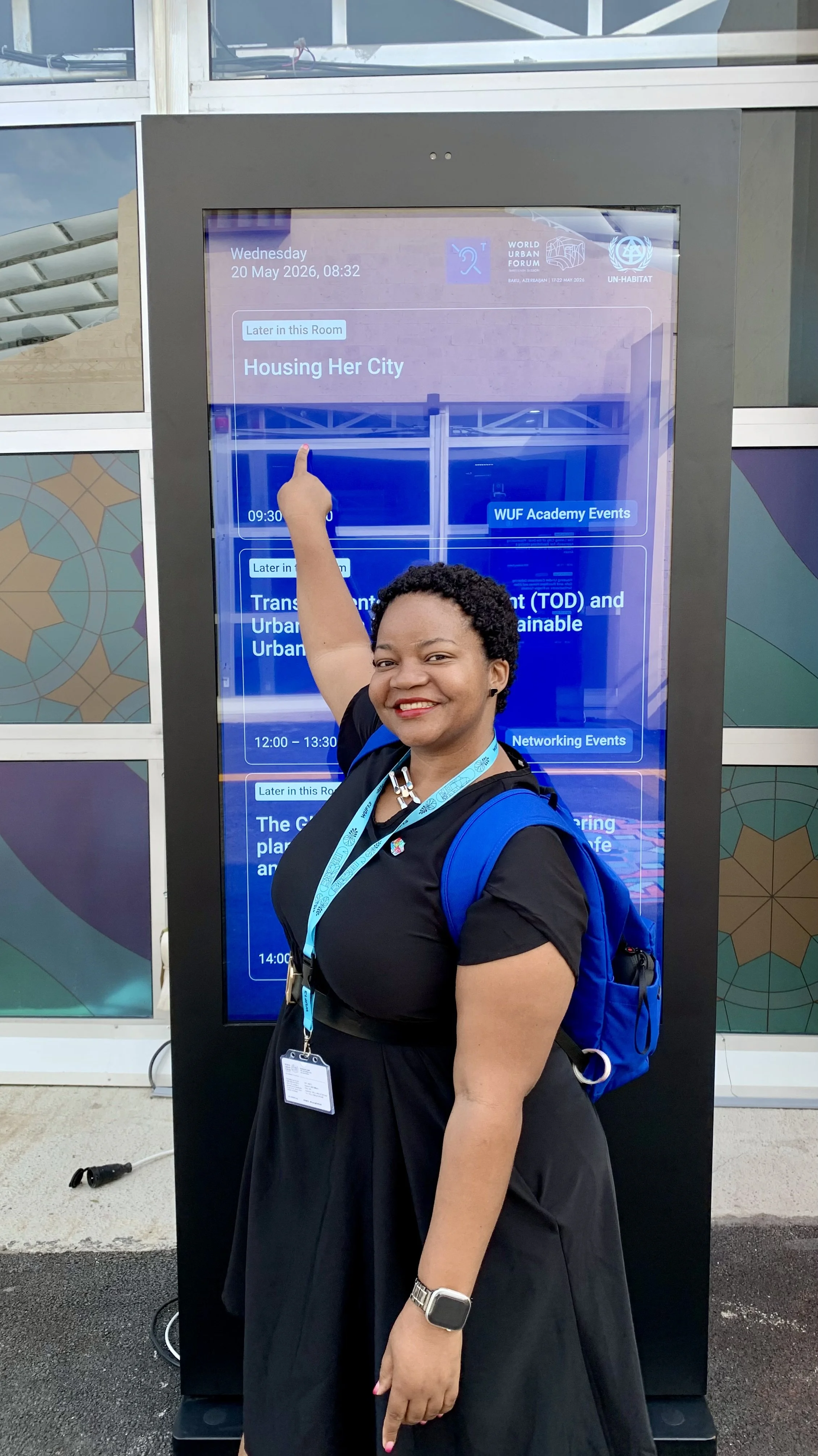
Ronah Ahumuza, leader of the Kampala-based organisation, Holistic Action for Development and Education, pointing at the event where she later would be sharing the story about her Her City project in Kampala.
The issue of water in cities was a theme throughout the week. We hosted a session “Living With Rivers - Water Sensitive Planning for Flood-Prone Settlements along the Nairobi River”, with panellists from Kounkuey Design Initiative, UN-Habitat and University College London (picture). With this event, we gathered stakeholders working with the rivers in Nairobi to bring together different experiences and perspectives on the topic. We also participated in a session “Living with Water - Advancing Flood-Resilient Cities through Multi-Stakeholder Collaboration” hosted by Architecture Sans Frontiéres Quebec. Aside from the water-focused sessions, we co-facilitated a “Housing Her City” training event. Together with the UN-Habitat Her City team, we guided the participants through a section of the Her City Toolbox, which is a feminist urban planning methodology created to enable sustainable and inclusive cities together with girls.
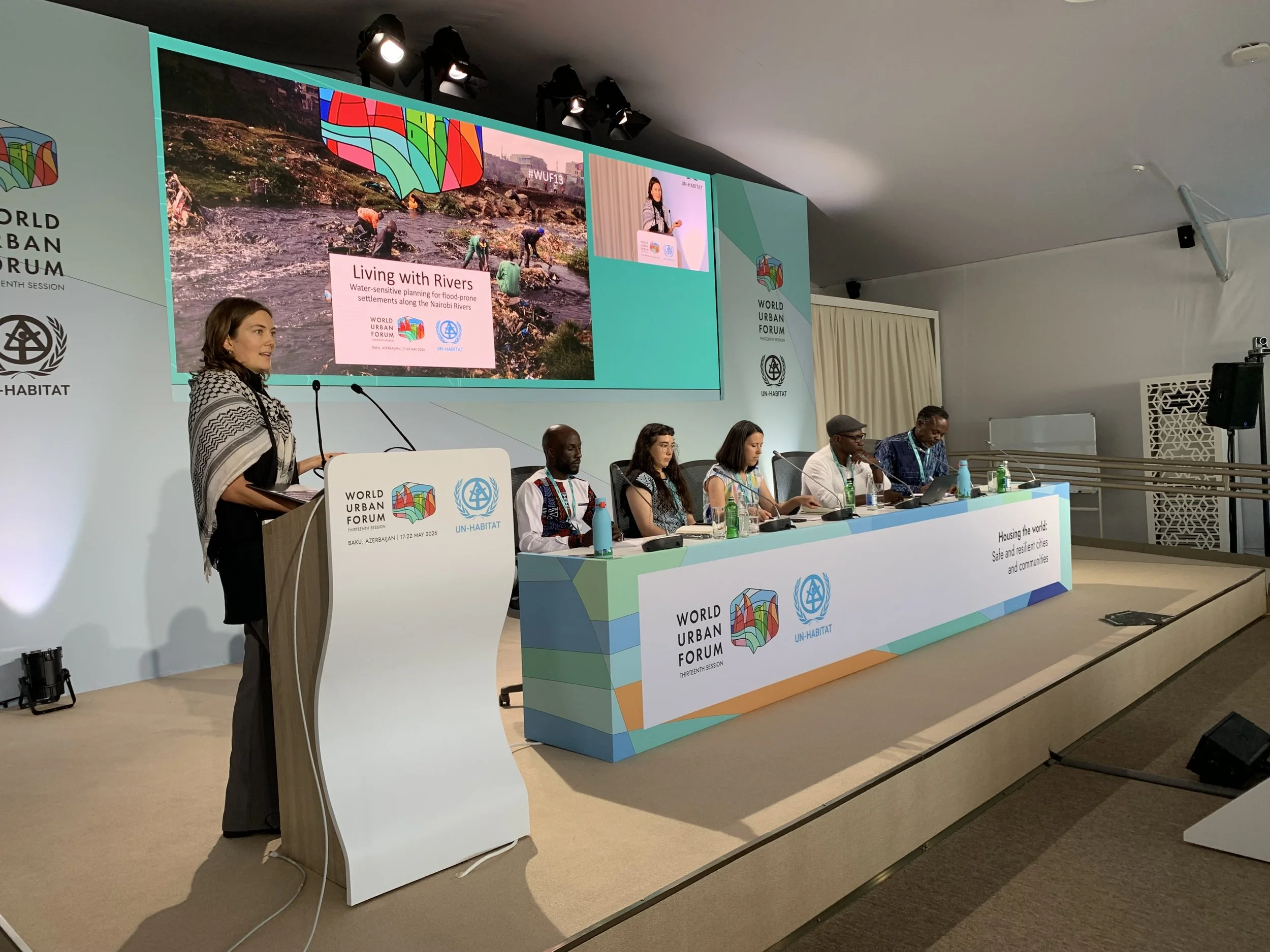
Stine Kronsted moderating an event about the rehabilitation of the Nairobi Rivers - guested by partners from PSN, KDI, UN-Habitat, and UCL.
Parallel to the panels and roundtable discussions, the Forum is a central arena for networking and advocacy. By visiting the country representatives in the Urban Expo, our partners from Network for Active Citizens (Uganda), House of Arts and Yellow World (Zimbabwe) were able to discuss their young people's issues directly with representatives from their city’s municipal offices. They made crucial connections that they can build on upon returning to their home countries.
At the Forum, we also had the opportunity to celebrate that Dreamtown signed a Memorandum of Understandingwith UN-Habitat. Dreamtown and UN-Habitat have already worked together on different projects, from Cool Waters Climate Academy in Nairobi to Her City in Kampala. Now - with pen on paper - we look forward to doing much more together. And we share the commitment to push for more inclusive and participatory urban development, which is also running through the halls of the conference. We look forward to connecting community priorities to UN‑Habitat’s global networks and technical expertise - and better opportunities to replicate and adapt approaches across urban settings together.
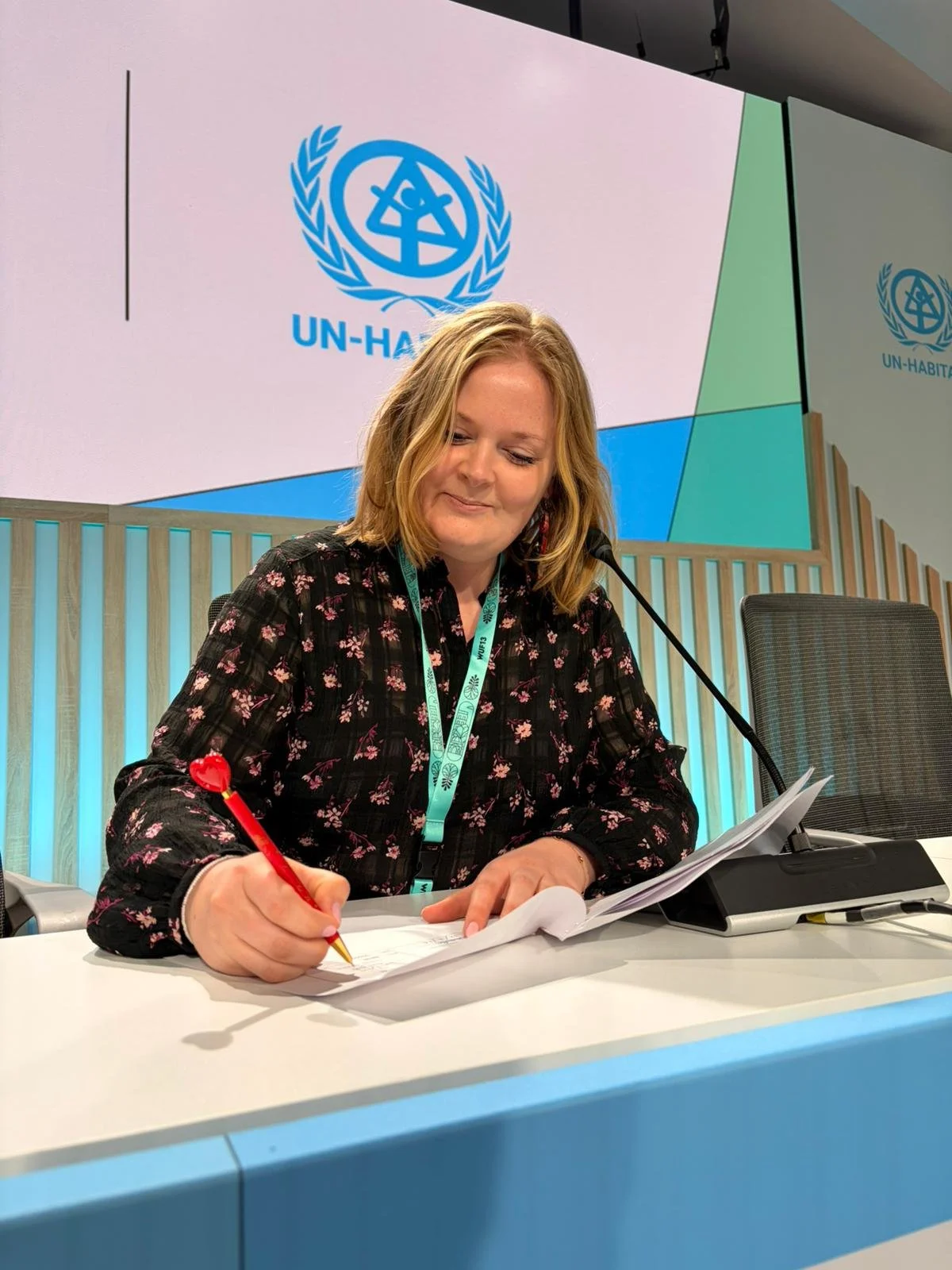
Nina Ottosen, leader of Dreamtown, signing the MoU with UN-Habitat.
Overall, the World Urban Forum has a strong representation of policy-makers, academics, and officials; however, there are fewer voices representing youth and grassroots groups. This is usually the case for the World Urban Forum, and the result is that real stories about the lived experiences in cities are missing from the high-level panels and discussions. While hearing stories from all over the world inspired us, it also highlighted the challenge that issues, weaknesses, and bottlenecks are often identified from the perspectives of INGOs, UN agencies, academia, or politicians. We were left wanting more concrete, community-led examples of solutions and transformational implementation that are already being put into practice. That reminds us that the role of communities at the frontline of urban issues, especially young people, is crucial for both understanding and acting on urban solutions. These are the experts of their lived realities, and it is their visions that will guide us to creating just and sustainable cities. Let the World Urban Forum motivate us to bring forward the role of communities, listen to the voices of the margin, and move beyond talking into creating real, tangible action.
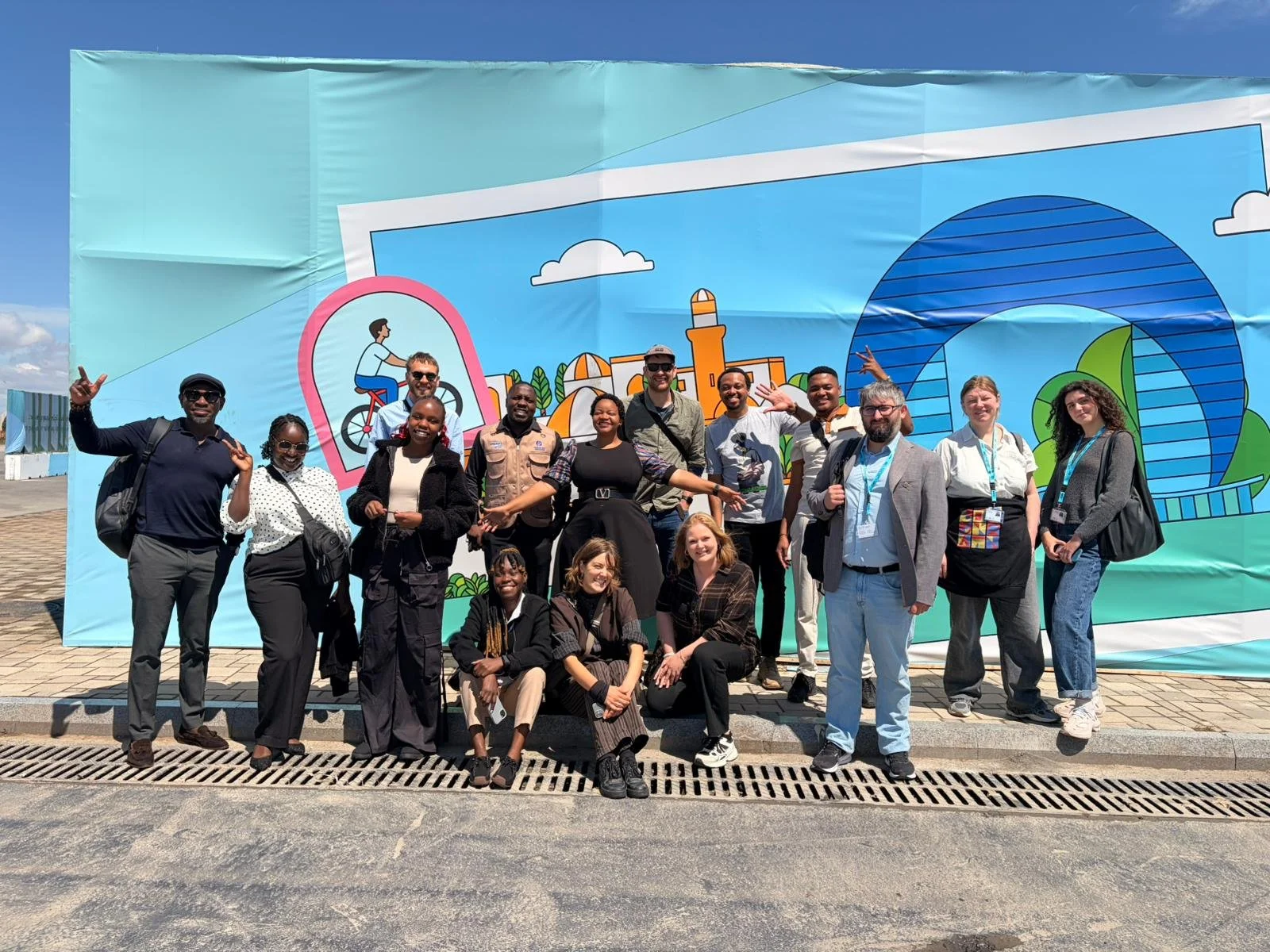
Our fantastic team, with delegations from Uganda, Kenya, Zimbabwe, Denmark and Ukraine.